


Choosing the right small business delivery vehicle can help reduce running costs, improve efficiency and support future growth. Explore seven key factors to consider and discover how the Suzuki Super Carry can support South African businesses.
Key takeaways
- The right small business delivery vehicle should balance fuel efficiency, payload capacity, reliability and long-term running costs.
- A fuel-efficient delivery vehicle can help reduce daily operating expenses and protect profit margins over time.
- When comparing delivery vehicles, look beyond the purchase price and consider servicing, insurance, maintenance and potential downtime.
- A dependable light commercial vehicle should be able to handle your typical load safely while supporting consistent day-to-day operations.
- A compact commercial vehicle can make city driving, parking and loading easier without sacrificing practical carrying capacity.
- Professional vehicle branding can turn everyday deliveries into an opportunity to build awareness and reinforce your business image.
- With its compact design, 750 kg payload and economical performance, the Suzuki Super Carry offers a practical option for South African small businesses.
7 Tips for Choosing a Small Business Delivery Vehicle
In South Africa’s fast-moving business environment, a reliable delivery vehicle is far more than a way to get from A to B. It’s an essential tool that keeps your operations moving.
Whether you’re transporting fresh produce, moving equipment, delivering online orders or providing on-site services, your vehicle can directly affect your efficiency, costs and customer experience.
The right delivery vehicle can help keep operating costs under control, make daily logistics easier and ensure customers receive their orders or services on time. An inefficient or unreliable vehicle, on the other hand, can put unnecessary pressure on your profits through higher fuel bills, repeated trips and unexpected downtime.
1. Fuel efficiency impacts your bottom line
Fuel is one of the biggest recurring expenses for any delivery-based business. When your vehicle travels the same routes every day, even a small difference in fuel consumption can add up over time.
Choosing a fuel efficient delivery vehicle can help you manage monthly expenses more effectively and protect your profit margin on every trip.
When comparing delivery vehicles, consider your expected weekly mileage and calculate the potential fuel cost over a full month or year, rather than only looking at the cost of filling the tank once.
2. Payload capacity matters
It’s not only about whether your goods physically fit. Your vehicle also needs to carry them safely and efficiently without exceeding its maximum payload.
The right payload capacity can help you transport heavier loads or complete more deliveries in fewer trips. This saves time, reduces unnecessary mileage and helps prevent the additional strain that overloading can place on a vehicle.
Consider both your average daily load and the heaviest loads your business regularly handles.
3. Reliability means less downtime
In business, time off the road can quickly become lost revenue.
A vehicle breakdown may result in delayed orders, missed appointments and frustrated customers. It can also leave employees, stock and equipment stranded when they’re needed most.
Choosing a dependable light commercial vehicle, supported by a solid warranty and roadside assistance, can help reduce disruption and give you greater confidence when planning your daily operations.
4. Low running costs add up
The purchase price is only one part of what a delivery vehicle will cost your business.
The total cost of ownership also includes:
-
Fuel
-
Insurance
-
Routine servicing
-
Replacement parts
-
Tyres
-
Licensing
-
Unexpected repairs
When choosing a light commercial vehicle for business use, owners should compare load capacity, fuel economy, expected uptime and total cost of ownership.A lower purchase price may not offer the best long-term value if the vehicle costs more to operate or regularly needs repairs.
5. Compact doesn’t mean less capable
Heavy traffic, tight suburban streets and cramped loading areas are everyday realities for many South African businesses.
A compact commercial vehicle can be easier to manoeuvre through busy areas, access narrow delivery points and park closer to customers. This can save valuable time, particularly for businesses completing several stops each day.
Compact commercial bakkies combine a smaller physical footprint with practical load space, helping businesses carry useful payloads without relying on a large van for every delivery.
The key is to find a vehicle that is easy to drive while still offering enough capacity for the work you need it to do.
6. Your vehicle is a mobile advertisement
Every kilometre your vehicle covers is an opportunity to build awareness of your business.
A clean, professionally branded delivery vehicle can act as a moving billboard, displaying your business name, services and contact details while you travel between customers.
It can also reinforce your professionalism. When customers see a neat, well-maintained vehicle arrive at their home or business, it helps create a strong first impression before the delivery or service has even begun.
7. The right vehicle can support business growth
Your delivery requirements may change as your business grows.
You might expand your delivery area, take on larger orders, transport heavier loads or add specialised equipment. Choosing a practical and versatile vehicle gives your business room to grow without forcing you to replace it too soon.
At the same time, buying a vehicle that’s much larger than you need could increase your fuel, finance and insurance costs.
The goal is to find the right balance between what your business needs today and where it’s realistically heading next.
What are the key features of a small business delivery vehicle?
A reliable small business delivery vehicle should offer good fuel efficiency, suitable payload capacity, easy urban manoeuvrability and manageable long-term maintenance costs.
Before investing in a vehicle for your business, here are seven important facts to consider.
Suzuki Super Carry commercial benefits
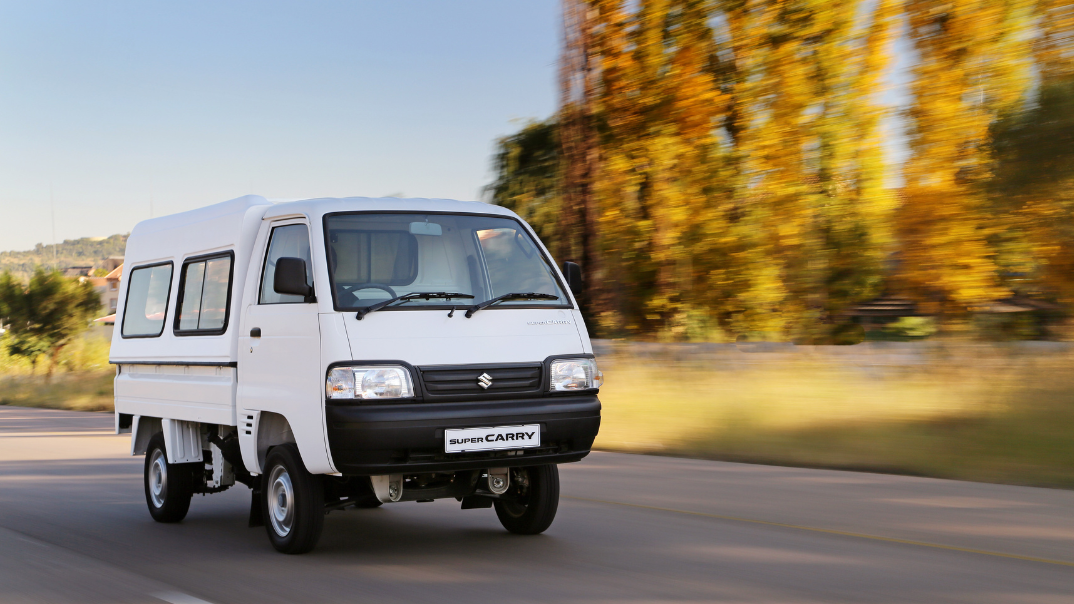
The Suzuki Super Carry is a compact commercial bakkie designed to help lower daily running costs and make urban deliveries easier for South African businesses.
-
Economical everyday performance
Powered by a 1.2ℓ petrol engine and five-speed manual transmission, the Suzuki Super Carry offers claimed fuel consumption from 5.9ℓ/100 km.
This makes it a practical option for businesses completing regular deliveries or travelling between several job sites each day.
Actual fuel consumption may vary depending on load weight, driving habits and road conditions.
-
Practical carrying capacity
Despite its compact footprint, the Super Carry offers a maximum payload of 750 kg. Its load deck measures 2 183 mm long and 1 488 mm wide, with drop-down sides that make loading and unloading more convenient.
This gives businesses useful space for transporting stock, tools, equipment, produce and other everyday loads.
-
Made for busy streets
A 4.3 m turning radius helps the Super Carry navigate congested urban areas, narrow roads and tight loading spaces.
Its 175 mm ground clearance also helps it manage uneven surfaces and less-than-perfect roads that may form part of a normal working day.
-
Warranty, dealer network and aftersales support
The Super Carry is supported by a three-year/100 000 km mechanical warranty and roadside assistance.
This can provide valuable peace of mind for businesses that rely on their vehicle to keep deliveries, appointments and operations on schedule.
Suzuki’s dealer network also gives business owners access to local servicing and aftersales support. For a vehicle that plays an important role in daily operations, convenient access to maintenance and support can help minimise disruption and keep your business moving.
-
Space to showcase your brand
The Super Carry’s practical load area also offers useful opportunities for business branding.
Imagine a local plumbing company making several calls across the same neighbourhood each week. A clearly branded vehicle displaying the company name, services and contact details is seen outside homes, in traffic and at job sites throughout the day. That repeated visibility can help build familiarity with the brand, so when someone nearby needs a plumber, the business is already more recognisable.
A hard-working partner for your business
Choosing the right transport for your business is an investment in customer trust. When deliveries are reliable, customers notice, helping you build loyalty and strengthen your reputation.
A well-chosen delivery vehicle should support future growth, keep drivers comfortable and give you access to dependable local service support. The right choice turns transport into a valuable business asset rather than an ongoing operational concern.
Ready to get your business moving? Discover how the Suzuki Super Carry could support your daily operations?
Book a test drive with Suzuki today.

.jpg)
.jpg)