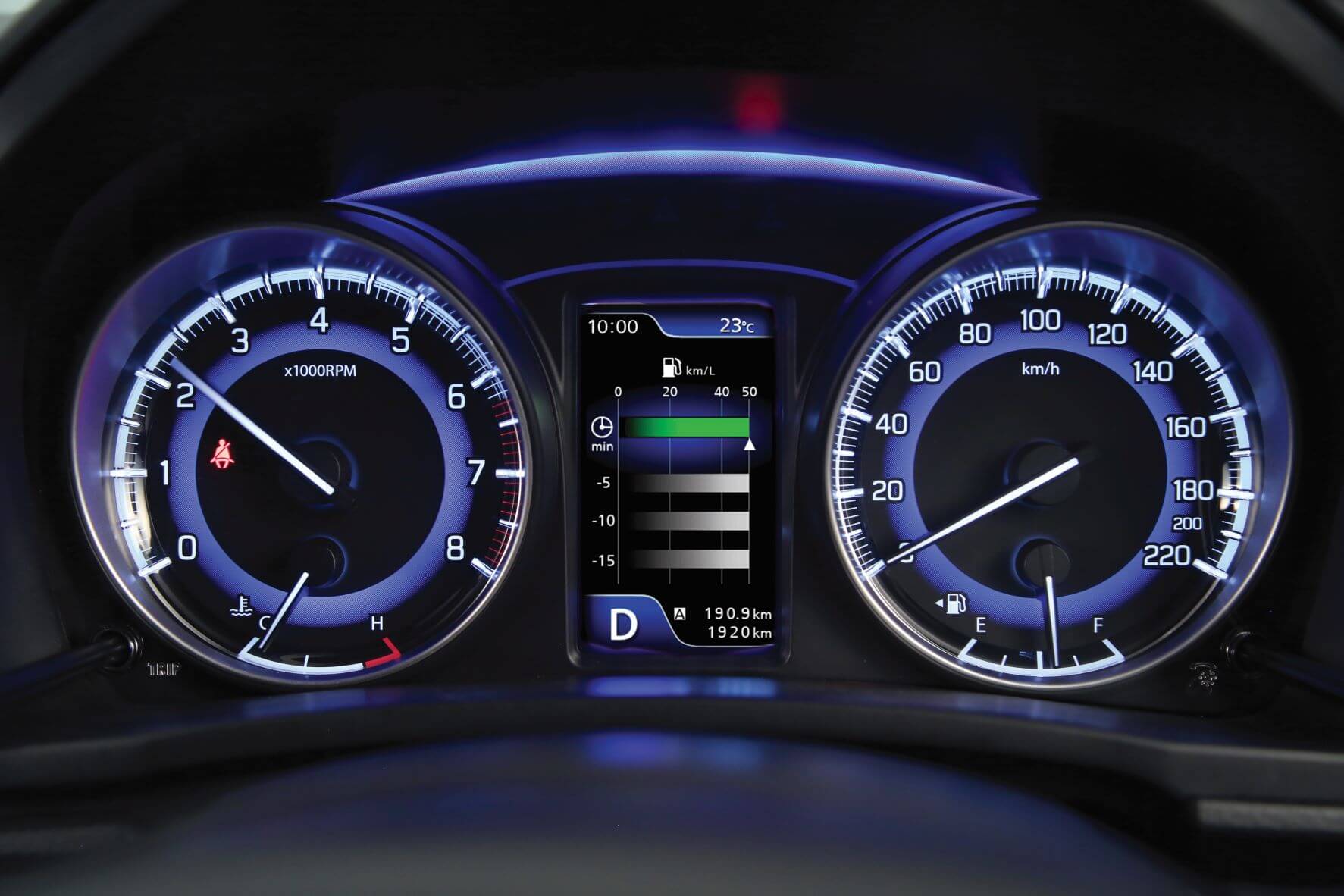


The Suzuki Across brings mild-hybrid technology to our South African range. Here’s how the system works, what it means for ownership, and where hybrid technology could take Suzuki next.
Key Takeaways
- The Suzuki Across is our first mild hybrid electric vehicle (MHEV) in South Africa, combining a 1.5-litre petrol engine with Suzuki’s SHVS mild-hybrid technology.
- Its Integrated Starter Generator (ISG) assists during acceleration, supports stop-start operation and helps recover energy while slowing down.
- The Across does not need external charging. Its hybrid battery recharges while you drive.
- Mild-hybrid technology can improve fuel efficiency by around 5% to 15% compared with a conventional internal combustion engine, depending on driving conditions.
- Unlike a full hybrid, a mild hybrid cannot drive on battery power alone. The electrical system supports the petrol engine rather than replacing it.
- Servicing remains familiar, with a 15,000 km or 12-month service interval, while future Suzuki hybrid technology in South Africa will depend on local demand, affordability and infrastructure.
%201.webp?width=1920&height=1340&name=301%20(11)%201.webp)
Hybrid technology is a relatively new part of modern motoring. As hybrid vehicles become a bigger part of the South African market, we’re entering the conversation with our most technologically advanced local model yet.
The Suzuki Across is our first mild-hybrid SUV in South Africa and our latest technology flagship, introducing a new powertrain alongside some of the most advanced features currently available in our local range.
As Brendon Carpenter, Suzuki Auto South Africa’s Brand Marketing Manager, puts it:
“It’s our newest flagship. It showcases a lot of technology that we can implement into our vehicles, and it’s at the forefront of the technology we have for a compact SUV.”
The Across GL also makes that technology more accessible, standing out as one of the most affordable mild-hybrid SUVs on the South African market today. Its 1.5-litre petrol engine remains the main source of power, with the mild-hybrid system assisting it to improve fuel efficiency during everyday driving.
From the driver’s seat, there isn’t much to adjust to. You fill up with petrol, drive the Across as you would any other Suzuki, and leave the hybrid system to manage itself.
What is a mild hybrid electric vehicle?
A mild hybrid electric vehicle, or MHEV, uses a petrol engine supported by an electrical system.
In the Across, the petrol engine remains responsible for moving the vehicle. The hybrid components assist when the engine would otherwise need to work harder, such as when pulling away and accelerating.
This is also what separates mild hybrid vehicles from full hybrids and battery electric vehicles.
|
Vehicle type |
How it works |
Needs external charging? |
|
Mild hybrid (MHEV) |
A petrol engine drives the vehicle, with electrical assistance to improve efficiency |
No |
|
Full hybrid |
Can use the petrol engine, electric power or a combination of both |
No |
|
Battery electric vehicle (BEV) |
Runs entirely on electricity stored in a larger battery |
Yes |
Because the Across is a mild hybrid, it cannot drive using battery power alone. The electrical side of the powertrain is there to support the petrol engine and reduce the amount of fuel it needs to use.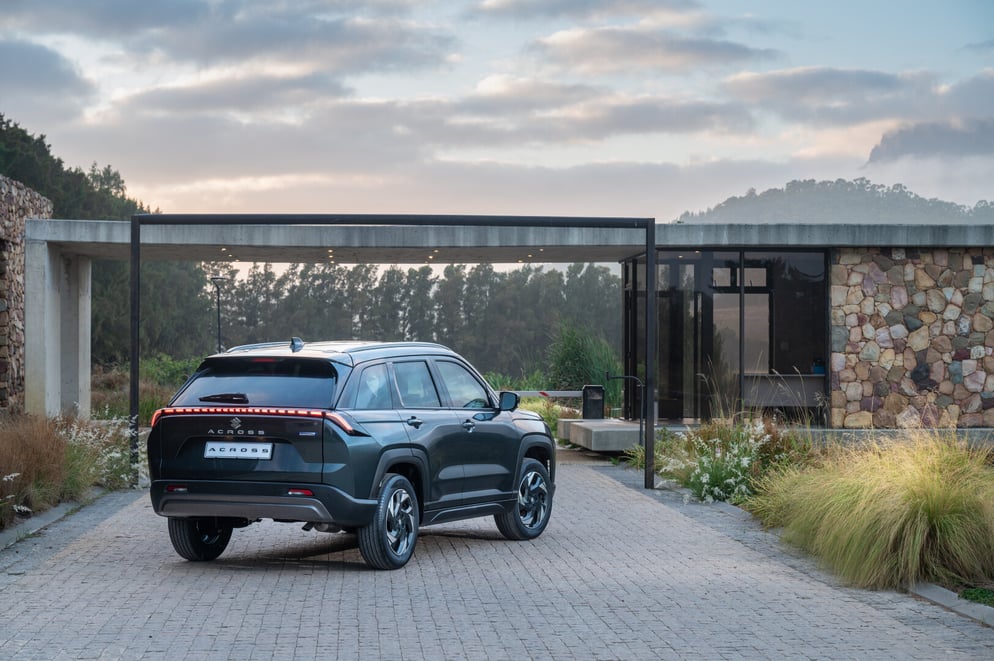
How the Suzuki Across mild-hybrid system works
The Across uses our Smart Hybrid Vehicle by Suzuki (SHVS) technology, including an Integrated Starter Generator, or ISG, and a hybrid battery.
The ISG performs a few different functions during a drive.
When you pull away or accelerate, it can assist the petrol engine and reduce some of the load placed on it. As the vehicle slows down, the system recovers energy and stores it in the hybrid battery so that it can be used again later.
The ISG also supports the automatic stop-start system. When the engine switches off while the Across is stationary, the ISG helps restart it smoothly when you move off again.
It’s a part of the system that Brendon noticed from behind the wheel:
“It’s probably the smoothest stop-start I’ve experienced in a vehicle. It’s built to work seamlessly in the background, so you almost don’t know the technology is there.”
All of this happens automatically. There are no electric driving modes to select and no need to decide when the battery should assist the engine.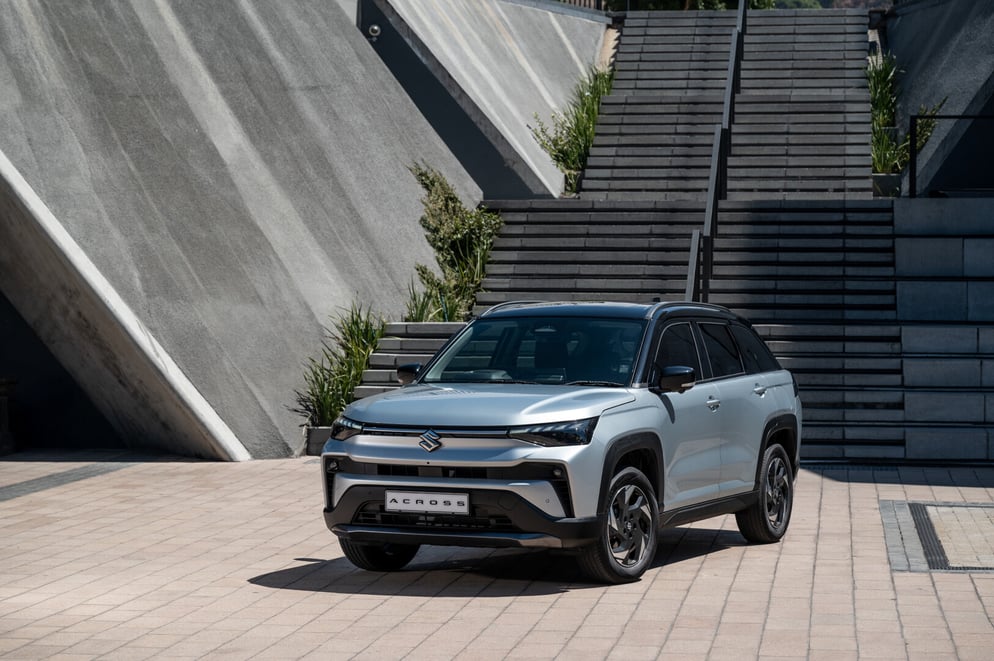
The Across uses its hybrid tech for efficiency
We developed the Across around a balance of everyday performance and lower fuel consumption.
The mild-hybrid system isn’t there to turn the Across into a high-performance SUV. Instead, the electrical assistance reduces the demand placed on the engine at the points where it can have a useful effect on fuel consumption.
As Brendon explains, the system is “built to work seamlessly in the background”, assisting the engine when you accelerate and easing off again once the Across settles into a steady cruising speed. The result is what he describes as “the best balance of comfort, performance and efficiency”.
The six-speed automatic transmission is an important part of how that power reaches the road, working with one of the smoothest Stop-Start systems we’ve introduced in a Suzuki.
Diederik Durand, Assistant Manager: Sales Training and Development, explains:
“Power is about the way the power’s applied. The six-speed automatic transmission makes the engine stand out with its smoothness and fuel efficiency.”
That smooth power delivery supports the Across’s broader focus on a comfortable, affordable drive that remains easy to live with day to day.
Around town, the Across can recover energy as you slow down, reduce idling through its stop-start system, and use electrical assistance when pulling away again.
On the open road, the petrol engine takes on more of the work as the vehicle settles into a steady cruising speed. The hybrid system can then assist again when more acceleration is required.
This makes the technology useful across the mix of driving most of us actually do, rather than only in stop-start traffic.
This system is useful across the mix of urban and open-road driving most of us actually do, rather than being geared mainly towards stop-start traffic.
Depending on driving conditions and driving style, mild-hybrid technology can offer fuel savings of around 5% to 15% compared with a conventional internal combustion engine.
Traffic, terrain, speed, and the load in the vehicle will all affect the number you eventually see on the fuel-consumption display, so real-world savings will vary from one driver to the next.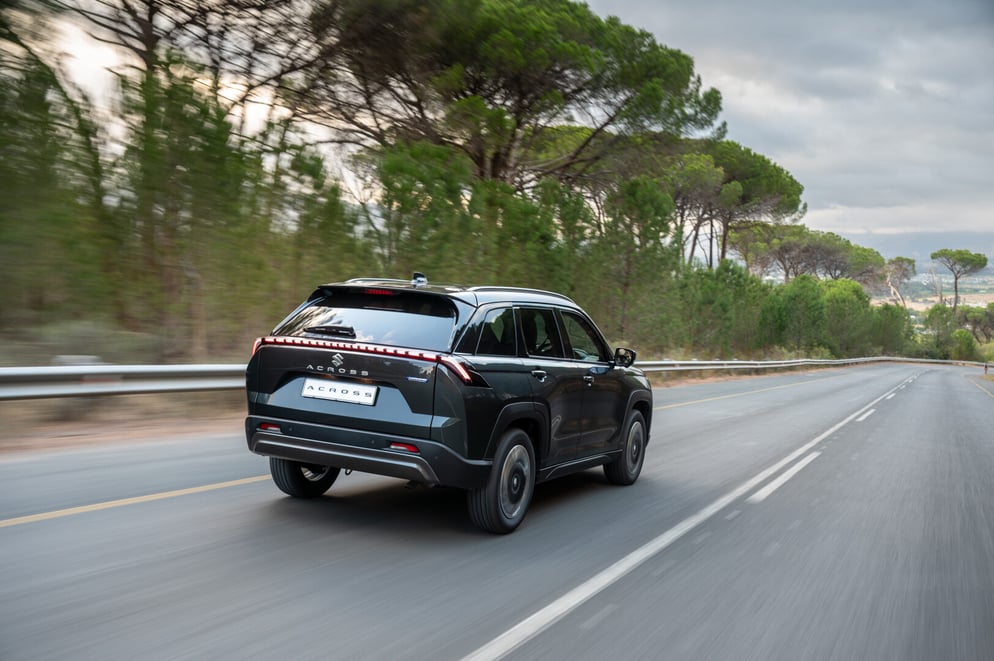
Mild hybrid doesn’t require plugging in
The Across has no external charging requirement.
Energy recovered while the vehicle slows down is used to recharge the hybrid battery, so there’s no charging point to find at home and no charging stop to add to a longer trip.
For Diederik, that simplicity is a big part of the appeal:
“It’s hassle-free motoring. You can conduct your day-to-day driving as you would with a normal internal combustion engine.”
That gives South African drivers another option between a conventional petrol vehicle and the more electrified hybrid and electric vehicles entering the market.
You still have the range and refuelling routine of a petrol-powered SUV, with electrical assistance helping the engine use that fuel more efficiently.
Servicing stays familiar
The addition of mild-hybrid technology doesn’t change servicing routines.
The Across follows a 15,000 km or 12-month service interval, and routine servicing remains largely in line with what owners of our conventional petrol vehicles are already used to.
David Anders, Manager: Customer Experience Management, explains:
“For the first four to five years, it’s pretty much the same as any ICE service parameters.”
That helps keep servicing costs familiar during the earlier years of ownership, while drivers still benefit from the fuel savings offered by the mild-hybrid system.
The hybrid battery is engineered to remain in the vehicle for its full lifecycle rather than being treated as a routine replacement item. If a fault does occur, replacement batteries are available and warranty concerns are covered accordingly.
For someone weighing up the total cost of ownership of a mild hybrid against a regular petrol SUV, that keeps the equation fairly straightforward. The potential saving comes primarily from using less fuel, without adding a significantly different maintenance routine during the earlier years of ownership.
Mild hybrid suits the way the Across will be used
The Across is a multi-dimensional SUV, designed for the kind of role where one vehicle often needs to do very different jobs from one day to the next
It can be the main vehicle for a family, someone’s first move into an SUV, or an option for a driver who wants to downsize from a larger SUV without losing the elevated driving position and everyday versatility.
That also means its day-to-day changes on a regular basis. A school run and work commute during the week can easily become a fully loaded highway trip over the weekend.
The mild-hybrid system works across those different conditions without asking the driver to use the Across differently.
Reliability remains part of that everyday usefulness too. As David explains:
“We have a reputation in the market for being extremely reliable, and that carries through to this vehicle as well.”
Safety has also been given plenty of attention across the range. All Suzukis are engineered with safety in mind, while the Across adds further active and passive safety technology. On the GLX model, DSBS II (Dual Sensor Brake Support II) uses camera and radar technology to help detect vehicles, pedestrians, cyclists and motorcycles, supporting the driver when the system identifies a potential collision risk.
These features are there to assist the person behind the wheel, not take over the job of driving. As David puts it, the technology “enhances the safety experience and the ability for the driver to drive the vehicle in a safe way.”
Together with its mild-hybrid efficiency and familiar ownership experience, that gives the Across the versatility to work as a genuine everyday SUV, whether it’s carrying the family, tackling the commute or heading further afield for the weekend.
The future of hybrid vehicles at Suzuki
The Across is an important step in Suzuki’s hybrid journey, but we don’t see electrification as a one-size-fits-all exercise.
Different vehicles serve different customers, and the technology needs to make sense for both.
A mild-hybrid system can be a good fit for a larger SUV where the fuel-saving benefit justifies the additional technology. In a smaller, already fuel-efficient vehicle, adding the same system could increase the purchase price without giving that customer enough extra value in return.
The same thinking applies when we look at stronger hybrid and fully electric vehicles.
Suzuki is developing and exploring a range of powertrain technologies globally, but what we introduce in South Africa will depend on local demand, affordability, infrastructure, and how people here use their cars.
This long-term view helps us live up to a core Suzuki value: whoever you travel, we’ll be By Your Side.
As Diederik explains:
“Our philosophy is that it’s not a short-term solution with a customer, but a long-term investment. We like to walk the road with a customer.”
What South African customers need will continue to guide which technologies make sense locally. Stronger hybrid and electric powertrains form part of the wider technology Suzuki is developing globally, but any future introduction here will need to suit the market, the vehicle and the value our customers expect from us.
For the Across, mild hybrid gives us a useful combination: lower fuel consumption than a comparable conventional petrol powertrain, familiar servicing, and no need for external charging.
It brings electrification into the Suzuki range in a way that suits South Africans now, while giving us room to keep developing what comes next!
Experience the Suzuki Across for yourself
See how mild-hybrid technology feels from behind the wheel and get to know the Across on a test drive.